When is the Best Time for a Helicopter Ride Over Bali?
When is the Best Time for a Helicopter Ride Over Bali?
- Peak Visibility: Clear, sunny skies are the norm, offering unobstructed views of volcanoes, coastlines, and rice terraces.
- Superior Photography: The “golden hour” light just after sunrise and before sunset creates dramatic shadows and rich colors.
- Comfort and Stability: Cooler air temperatures and calmer atmospheric conditions result in a smoother, more pleasant flight experience.
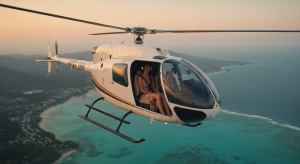
The whir of the rotors builds from a whisper to a confident thrum, a sound that vibrates not just in the air but through the soles of your feet. As the skids of the Airbus H130 lift from the helipad with impossible grace, the world you know—the scent of frangipani, the texture of volcanic stone—recedes. In its place, a cartographer’s dream unfolds. The patchwork of emerald rice paddies, the intricate weave of village roads, the sapphire expanse of the Indian Ocean—it all resolves into a singular, striking . This is the Bali few ever see, a perspective that transforms the familiar into the magnificent. But capturing this moment, in all its clarity and color, is a matter of precise timing. It’s a question I’m asked constantly, and the answer is more nuanced than simply picking a sunny day.
Decoding Bali’s Seasons: Dry vs. Wet for Aerial Views
Bali’s proximity to the equator, just eight degrees south, means it bypasses the four distinct seasons of temperate climates for a simpler, two-act drama: the dry and the wet. For any helicopter ride over Bali, understanding this rhythm is fundamental. The dry season, running roughly from April through October, is the undisputed champion for aerial touring. During these months, particularly from June to August, the weather is at its most cooperative. Monthly rainfall typically dips below 70 millimeters, and you can expect an average of 8-10 hours of sunshine per day. The skies are a high, brilliant blue, offering crystalline visibility that stretches from the volcanic peaks of the interior all the way to the distant shores of Lombok on a clear day. The air is less humid, which not only enhances comfort but also reduces the atmospheric haze that can soften distant details. This is the period when hotel occupancy rates can soar above 80%, and for good reason—it is, by all accounts, Bali at its most picturesque and predictable.
Conversely, the wet season, from November to March, presents a different canvas. Driven by the monsoon, these months can see rainfall exceed 350 millimeters, especially in January and February. This doesn’t mean nonstop rain; rather, it’s characterized by intense, tropical downpours, often in the afternoon, followed by periods of sunshine. The challenge for aviation is the accompanying cloud cover and reduced visibility. However, to dismiss this season entirely would be a mistake. The island is at its most verdant, a riot of impossible greens. Waterfalls like Sekumpul, which can be a modest flow in August, become thunderous cataracts. For the intrepid traveler, a flight scheduled between weather systems can yield some of the most dramatic views imaginable, with misty clouds clinging to the jungle canopy and rainbows arcing over the rice fields. A premier charter service prioritizes safety above all, and our flight coordinators work with meteorological data to find those perfect, clear windows even in the center of the wet season.
The “Golden Hours”: Why Time of Day Is Paramount
As any seasoned photographer from my team at Departures will attest, the quality of light can make or break an image. This principle is magnified tenfold when your lens is pointed down from 1,500 feet. While Bali’s equatorial sun provides bright light all day, the time you choose to fly dictates the texture, depth, and mood of everything you see. The two most coveted slots are the “golden hours.” The first occurs shortly after sunrise, typically between 7:00 and 9:00 AM. During this window, the air is at its coolest—a comfortable 25°C—and often its stillest, promising an exceptionally smooth flight. The low-angled sun casts long, elegant shadows, sculpting the landscape. The ridges of the Tegallalang rice terraces are sharply defined, and the caldera of Mount Batur is thrown into dramatic relief. It’s a crisp, clean light that reveals the island waking up.
The second golden hour, from roughly 4:30 PM until sunset around 6:30 PM, offers a warmer, more romantic palette. The light is soft and diffused, bathing the island in hues of gold and amber. This is the premier time for coastal tours. The cliff-hanging Uluwatu Temple is set ablaze by the setting sun, and the ocean surface transforms into a glittering expanse of liquid metal. This is also when marine life can be more active near the surface. A flight I took last year with a veteran pilot, Captain Wayan, over the Nusa Islands at this time revealed a fever of Manta Rays, their dark forms clearly visible in the translucent, sun-kissed water. Midday flights, between 11:00 AM and 2:00 PM, while offering the brightest illumination, come with the harshest light. The sun is directly overhead, which can flatten the topography and wash out colors, and the rising heat can create more thermal turbulence. While perfectly safe and still spectacular, for the true connoisseur of views, the day’s gentle beginnings and endings are .
Aligning Your Flight with Balinese Cultural Events
A truly exceptional journey goes beyond geography to touch the cultural soul of a destination. Timing your bali private heli flight to coincide with the island’s vibrant ceremonial calendar offers a perspective that is both unique and deeply insightful. The Balinese Hindu calendar, the Pawukon, is a complex 210-day cycle, meaning major festivals shift each year. One of the most visually arresting from the air is Galungan, a 10-day celebration where the ancestral spirits are believed to visit the earth. During this time, every road and village entrance is adorned with “penjor”—enormous, gracefully arching bamboo poles decorated with coconut leaves, fruits, and flowers. Seeing thousands of these lining the arteries of the island from above is an memorable spectacle of devotion and artistry. Another key event is Nyepi, the Balinese Day of Silence, which typically falls in March. While no flights operate on Nyepi itself as the entire island, including its airport, shuts down for 24 hours, the day before is a different story. This is the day of the Ogoh-ogoh parades, where villages parade giant, demonic effigies. An aerial view provides a fascinating glimpse into the scale of these community-based artistic endeavors before they are ceremonially burned at sunset.
Even beyond the major holidays, Bali’s ceremonial life is constant. With an estimated 20,000 temples on the island, a temple anniversary, or “odalan,” is always happening somewhere. A bespoke charter allows for the flexibility to route over a major temple like Besakih on the slopes of Mount Agung during its odalan, offering a respectful, non-intrusive view of the colorful processions and elaborate offerings—a privilege few travelers ever experience. This level of planning transforms a scenic tour into a cultural immersion, connecting the physical landscape to the spiritual heartbeat that animates it.
The Volcanic Factor: Viewing Agung and Batur Safely
The majestic volcanic peaks of Mount Agung and Mount Batur are the geological anchors of Bali, spiritual centers that are high on the recommended list for any visitor. Viewing these titans from the air is a humbling experience, but one that requires specific timing. Mount Agung, the island’s highest point at 3,031 meters, and the active caldera of Mount Batur (1,717 meters) are notorious for generating their own weather systems. The cardinal rule for volcano viewing is to go early. The air in the pre-dawn and early morning hours is typically clear and stable, offering unimpeded views into the craters and down the vast lava fields. By 10:00 AM, it’s common for convective clouds to begin forming around the summits, and by noon, they can be completely shrouded in a thick blanket of white, a phenomenon that can persist for the rest of the day. An early morning departure is not just a recommendation; it is essential for a successful volcano tour.
Safety, of course, is the non-negotiable priority when operating near active volcanoes. Indonesian aviation authorities, in conjunction with the Centre for Volcanology and Geological Hazard Mitigation, maintain strict exclusion zones around the peaks, which can change based on seismic activity. Any professional charter operator, like the team at Bali Private Heli Place, maintains constant communication with these authorities. Flight paths are meticulously planned to provide the most dramatic and intimate views possible while adhering to a safety buffer that is often several kilometers wide. This ensures that you can marvel at the raw power of the earth without ever being exposed to risk, enjoying a perspective that is both thrilling and entirely secure. As detailed by Indonesia’s official tourism portal, indonesia.travel, these natural monuments are central to the island’s identity.
Tailoring the Season to Your Itinerary: Coasts vs. Central Highlands
The “best” time for your helicopter ride over Bali can also depend on what you wish to see. The island’s diverse microclimates mean that the ideal season for exploring the southern coast might differ from that for the central highlands. For a coastal itinerary focusing on the dramatic cliffs of the Bukit Peninsula, the world-class surf breaks, and the neighboring islands of Nusa Lembongan and Penida, the peak dry season from June to August is unmatched. During this period, the ocean is typically calm, and the water clarity is extraordinary, often exceeding 25 meters. This is when you can easily spot coral reefs, seaweed farms, and large marine life from the air. The brilliant turquoise of the shallow lagoons against the deep blue of the Bali Strait is a visual that defines tropical perfection.
For those more captivated by Bali’s cultural heartland—Ubud, the volcanic lakes, and the sprawling rice terraces—the shoulder season months of April, May, September, and October can be the superior choice. This period offers a sublime balance. The heavy rains have subsided, but the landscape remains at its most lush and vibrant. The rice paddies, part of a UNESCO World Heritage-listed cultural landscape known as the Subak system, are a brilliant, almost fluorescent green. The crowds of the peak season have thinned, yet the weather remains predominantly sunny and stable. A flight over the Kintamani highlands during these months reveals a landscape that is alive and breathing, with cooler temperatures and a clarity that makes the central mountain range feel close enough to touch. By matching the season to your specific points of interest, you can elevate a great experience into a perfect one.
Quick FAQ: Your Bali Helicopter Ride Questions Answered
What happens if the weather is bad on the day of my flight?
Client safety and experience are the absolute priorities. Any reputable operator will have a proactive weather policy. If conditions are deemed unsafe or unsuitable for a quality tour (e.g., heavy rain, low cloud ceiling), our flight coordination team will contact you to reschedule for the next available clear-weather window at no additional charge. If a suitable alternative cannot be found within your travel schedule, a full refund is typically offered. It’s a seamless and stress-free process.
How far in advance should I book my helicopter tour?
For the peak dry season, from June through August, we strongly recommend booking at least 4 to 6 weeks in advance. The coveted sunrise and sunset slots, in particular, are often reserved months ahead of time. During the shoulder months (April, May, September, October) or the wet season, a lead time of 1 to 2 weeks may be sufficient. However, as with any exclusive experience, booking further in advance always guarantees the best selection of aircraft and timings.
Is a helicopter tour noisy or uncomfortable?
This is a common concern, but one that is largely outdated. The modern fleet used for premium tours, such as the Airbus H130 or Bell 505, is specifically designed for passenger comfort. These aircraft feature advanced noise-reduction systems, climate-controlled cabins, and panoramic windows. You will be provided with high-fidelity headsets that cancel out rotor noise and allow for clear communication with your pilot and fellow passengers, all while enjoying a remarkably smooth and stable flight.
Can I customize my flight path?
Absolutely. While there are several expertly designed scenic routes, the ultimate luxury of a private charter is customization. A bespoke bali private heli experience means you can collaborate with our team to design a flight path that aligns perfectly with your interests. Whether you want to linger over a specific remote waterfall, photograph your private villa from above, or focus entirely on the volcanic ridge, your itinerary can be tailored to your vision, all while adhering to air traffic control and safety protocols.
Ultimately, the “best” time for a helicopter ride over Bali is a personal equation, weighing the clarity of the dry season against the dramatic verdancy of the wet, the crisp light of dawn against the warm glow of dusk. The true luxury lies in the ability to choose, to tailor the moment to your own definition of perfection. A private charter provides precisely that—the freedom to command your own perspective, to see the Island of the Gods on your own terms. To orchestrate your aerial masterpiece and consult with experts on the perfect timing for your journey, explore the bespoke charter options at Bali Private Heli. Our flight coordinators are ready to align the ideal aircraft, pilot, and time for your definitive Balinese experience.